


- MAS’s commits to restore and conserve 31,000+ acres of biodiversity, 100× its operational footprint, across 15 countries by 2030
- A six-model restoration framework offers tailored interventions to each ecosystem
- 25,058 acres restored under Plan for Change 2025, proving MAS’ model is scalable and globally relevant
- Global restoration includes 12,601 acres in Indonesia and 8,275 acres in Kenya
Sri Lanka is one of the world’s richest biodiversity hotspots, with nature deeply intertwined with community life. Reflecting this connection, across the island, small-scale conservation efforts have always thrived in pockets. For MAS Holdings, the urgency of the environmental crisis made it clear that scattered initiatives were not enough- it was time to bring them together into an impactful, long-term approach. Employees have also welcomed the chance to be part of projects that protect nature, finding meaning in contributing to something that benefits both their communities and the environment.
Recognising this, apparel-tech conglomerate MAS Holdings has made biodiversity restoration central to its sustainability roadmap, the MAS Plan for Change 2030. Building on its commitments for 2025, the company has pledged to reforest and restore biodiversity across an area 100 times larger than its global operational footprint.
For an organization that spans 15 countries- across North America, Europe, Asia and Africa, this amounts to more than 31,700 acres of land. According to Nemanthie Kooragamage, Director – Group Sustainable Business at MAS Holdings, achieving reforestation on such an ambitious scale demands bold and innovative approaches.
“Well-planned restoration can do far more than replace lost trees,” she explains. “It can reconnect fragmented landscapes, stabilise soils, improve freshwater quality, rebuild coastal and mangrove nurseries, and create wildlife corridors- benefits that safeguard nature and the long-term resilience of apparel supply chains and communities.”
Building a Scalable Goal
The roots of MAS’ biodiversity goal trace back to 2017, when it pledged to restore 250 acres of land, equivalent to its operational footprint at the time. By the end of the initiative, the company had doubled its target and restored 500 acres of land.
Even then, MAS recognised that planting trees alone was not enough. As it pursued this goal, it became clear that landscapes face different pressures, from invasive species to degraded soils, and therefore require tailored interventions. And so, MAS developed its six-model framework for restoration: Conservation, Reforestation, Invasive Removal, Afforestation, Analog Forests, and Forest Gardens.
This framework later underpinned the biodiversity target set under Plan for Change 2025, which scaled up the 2017 pledge to restore 100 times MAS’ operational footprint at the time, a total of 25,000 acres.
Applying the Six-Model Approach
Over the last five years, the six-model framework has been put into practice, with projects demonstrating how different contexts required different interventions.
Conservation was at the heart of the Panama In-Situ Turtle Conservation Project, launched in partnership with two corporates and the Wildlife and Ocean Resources Conservation Society. Protecting a three to ten-kilometre stretch of coastline, the project has safeguarded 272 nests and released over 17,000 hatchlings since October 2023, directly supporting the survival of endangered sea turtle species.
Reforestation included the restoration of 10 acres of mangroves in Trincomalee, where MAS achieved an 81% sapling survival rate. Meanwhile, the Ittapana Mangrove Forest Reforestation Project, undertaken with the University of Sri Jayawardenepura and local communities, planted 500 saplings with a 94% survival rate. Beyond ecological restoration, it enhanced local fisheries, improved water quality, and engaged students and residents, ensuring long-term community impact.
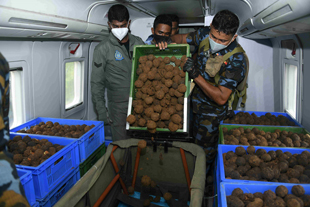
To restore large, inaccessible degraded terrains, MAS partnered with the Sri Lanka Air Force to disperse seed bombs. This aerial reforestation method restored 275 acres and achieved a 45% survival rate, demonstrating an efficient solution for landscapes that could not be rehabilitated through conventional means.
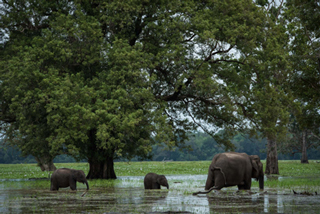
Invasive Alien Species (IAS) removal was another critical strand, with programmes carried out in national parks in partnership with the Department of Wildlife Conservation. At Horton Plains, MAS removed Ulex europaeus from 82% of the affected areas and restored 244 acres of sensitive ecosystem. At Udawalawe and Lunugamwehera, the manual removal of Lantana camara supported the regeneration of grasslands vital for elephants, leopards, and sloth bears.
“We tested different approaches in Sri Lanka, from coastal conservation to seed bombing and invasive species removal, and they proved effective in their own contexts. With the scale of our biodiversity goals and our global operational footprint, the next step was to take these learnings beyond Sri Lanka and apply them internationally,” said Uvini Athukorala, Manager – Environmental Sustainability.
Expanding Globally
As part of its Plan for Change 2025 biodiversity conservation efforts, MAS extended projects beyond Sri Lanka to countries where it also has manufacturing operations. This ensured that the company’s restoration work addressed the landscapes and communities directly connected to its business footprint.
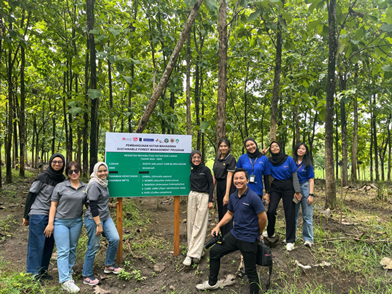
In Central Java, Indonesia, the Blora Ngawi Biodiversity Restoration Project has restored over 12,601 acres since 2023. The initiative planted more than half a million trees and established a multi-stakeholder forest management model that combines forest protection, land rehabilitation, and habitat enrichment.
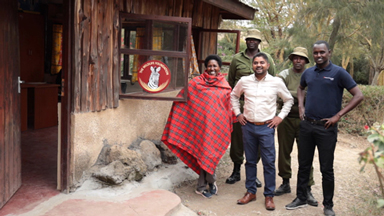
In Kenya, MAS launched its largest conservation project to date, protecting 8,275 acres within the Nairobi National Park, in partnership with The Wildlife Foundation. The project secured wildlife corridors critical for elephants, lions, and cheetahs, reduced human-wildlife conflict, and created conservation-linked livelihoods for more than 600 people, with women and youth playing a central role.
These global projects demonstrated that the lessons learned in Sri Lanka, experimenting with diverse approaches and working hand in hand with local partners, could be successfully scaled in other contexts, while directly benefiting the communities where MAS operates.
Lessons for the Future
As the Plan for Change 2025 concludes, MAS has restored 25,058 acres toward its biodiversity conservation goal. The experience highlights two key lessons. First, that restoration must be context-specific. From mangrove reforestation in Trincomalee to invasive species removal in Horton Plains, or aerial reforestation of degraded terrain, each ecosystem required a different model to deliver meaningful results. Second, that collaboration is essential. Partnerships with government agencies, non-profits, universities, and local communities in Sri Lanka, Indonesia, and Kenya ensured both technical expertise and local ownership, making projects sustainable beyond their initial interventions.

